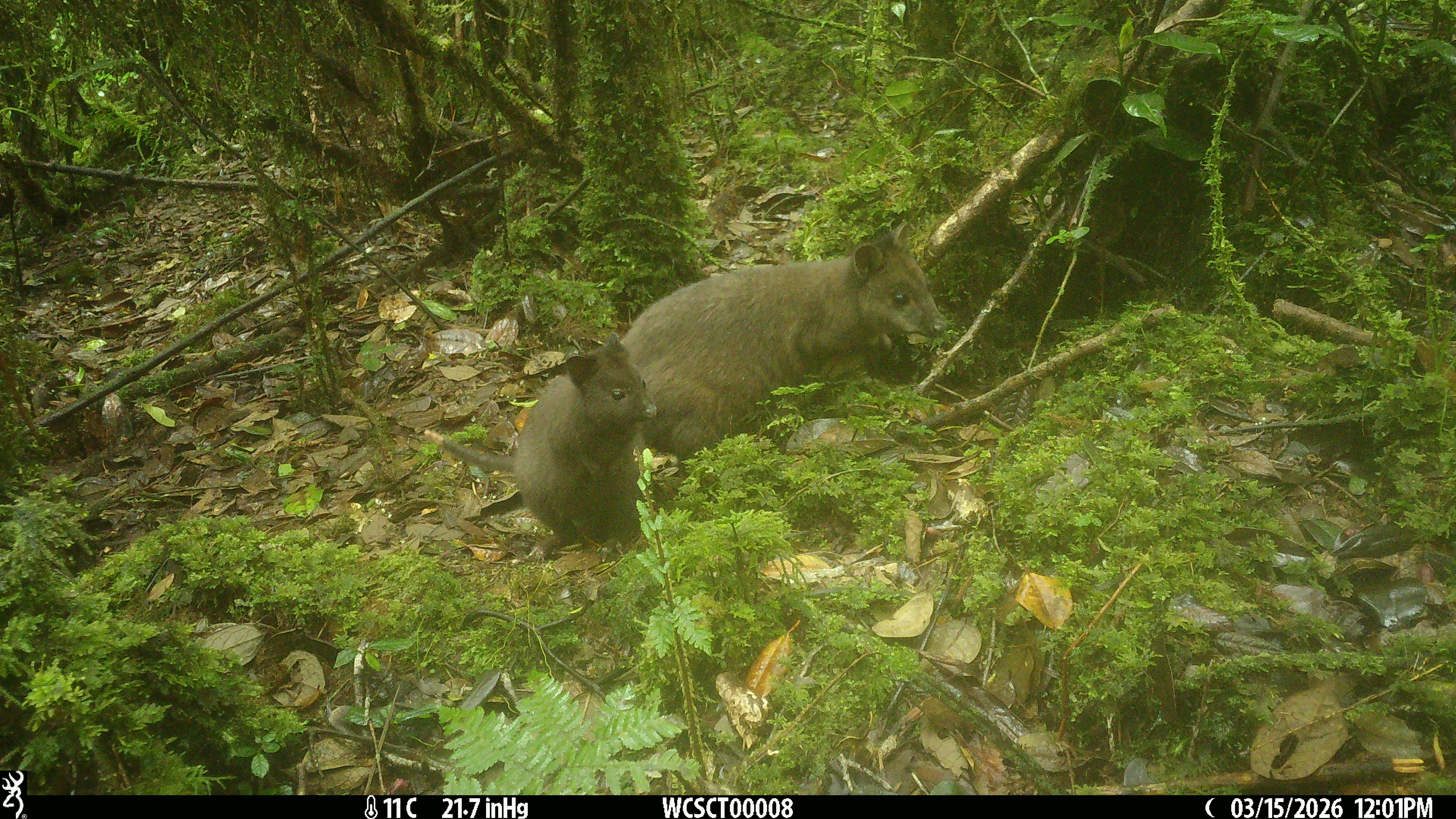
Pic 1: A sign of a healthy ecological environment captured at the Inaugl Natural Resource Management Inc. Conservation Area (KGWan). This image is unique because it shows a mother and baby wallaby that the WCS science team are yet to identify.
World Ecology Day (1 November) and everyday reminds us that people and nature thrive together.
In the mountains of Simbu Province, Papua New Guinea, a conservation initiative led by the Wildlife Conservation Society (WCS) PNG Terrestrial Team is demonstrating the importance of community-led conservation. Communities are taking the lead in the protection of wildlife as custodians and knowledge keepers of their ecosystems.
Working alongside community-based organisations and local landowners, the project combined scientific research with community participation. Through hands-on training and field experience, community members gained practical skills in setting up and maintaining camera traps, managing batteries, retrieving memory cards, and conducting routine equipment maintenance.
Camera traps are motion-activated cameras placed in the forest that capture photographs and videos of wildlife without disturbing animals in their natural habitat. The technology allows researchers and communities to better understand which species are present, where they occur, and how they use the landscape.
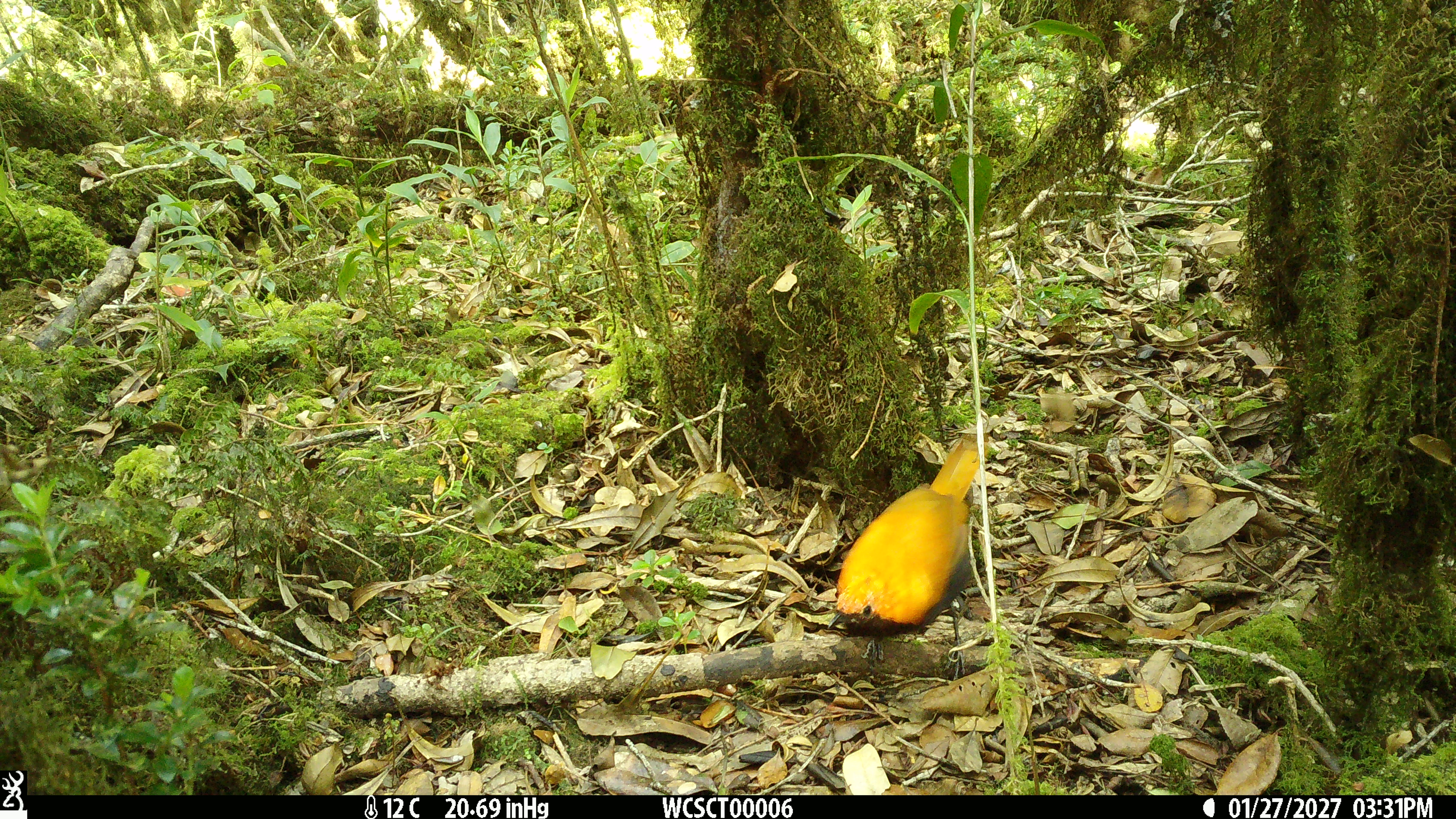
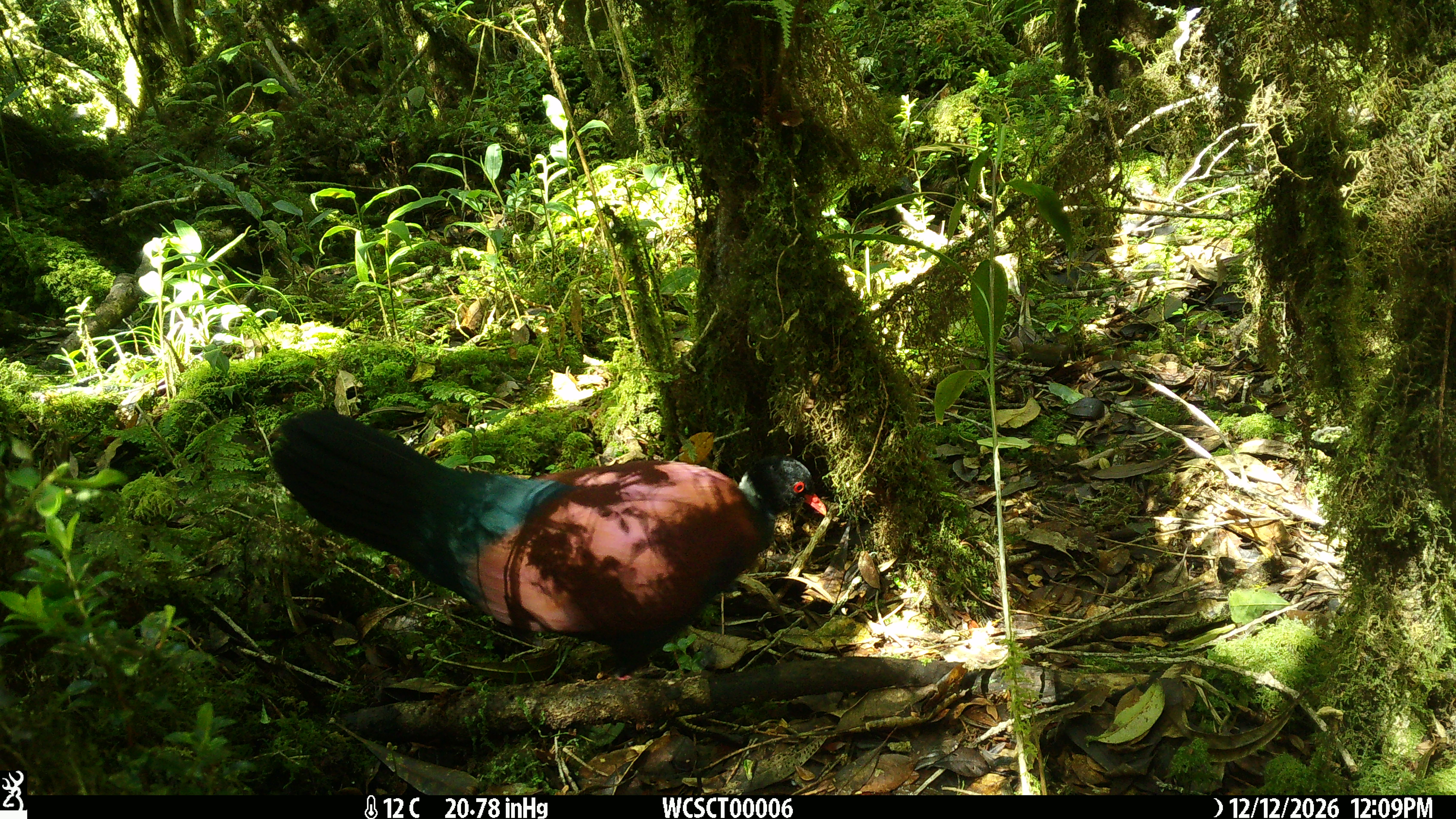
Pic 2 & 3 (left - right): Crested satin bird captured at the Mt Wilhelm Biodiversity and Nature Conservation Area (Kakagl) & a Pheasant Pidgeon captured at the Inaugl Natural Resource Management Inc. Conservation Area (KGWan) .
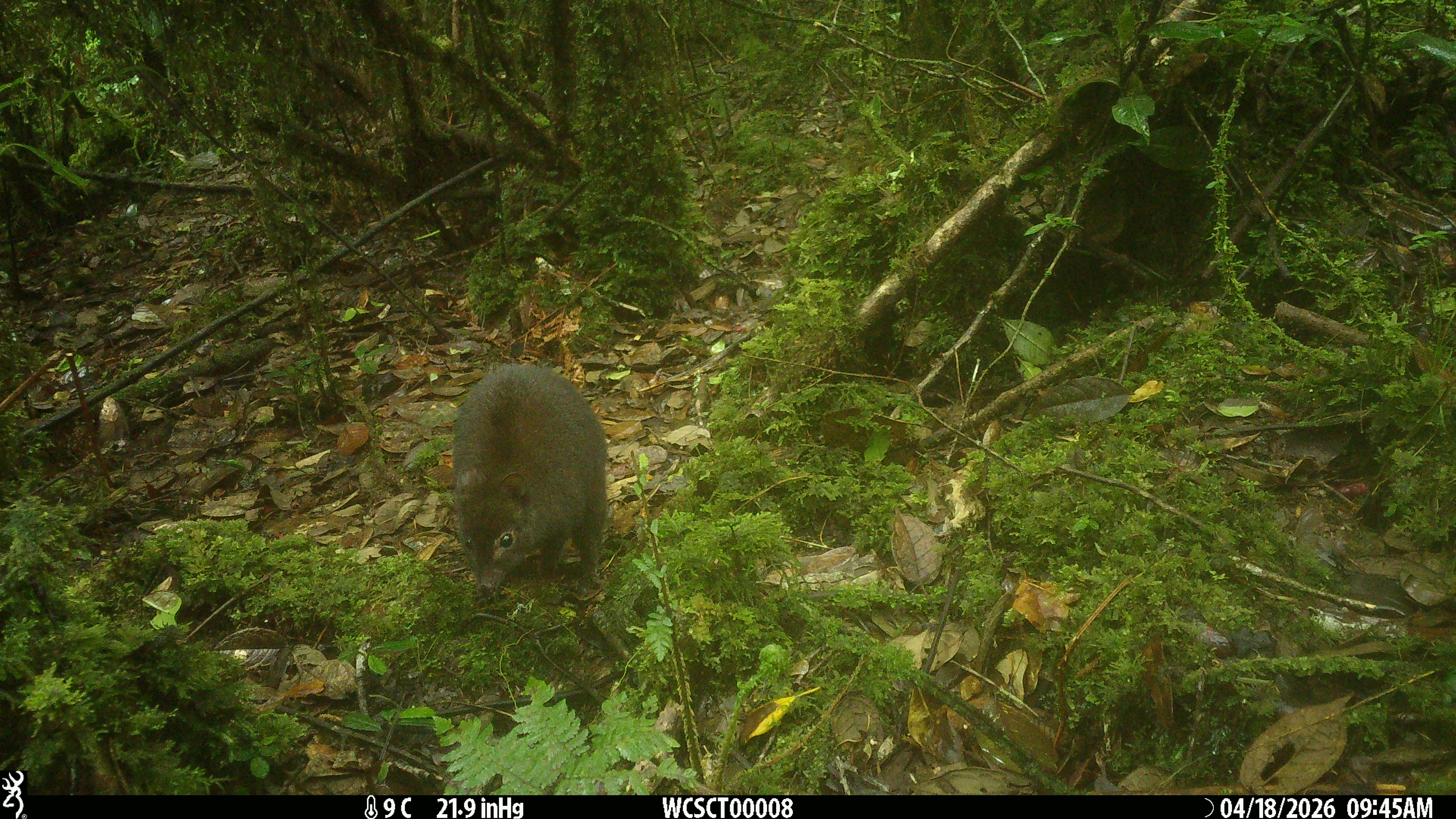
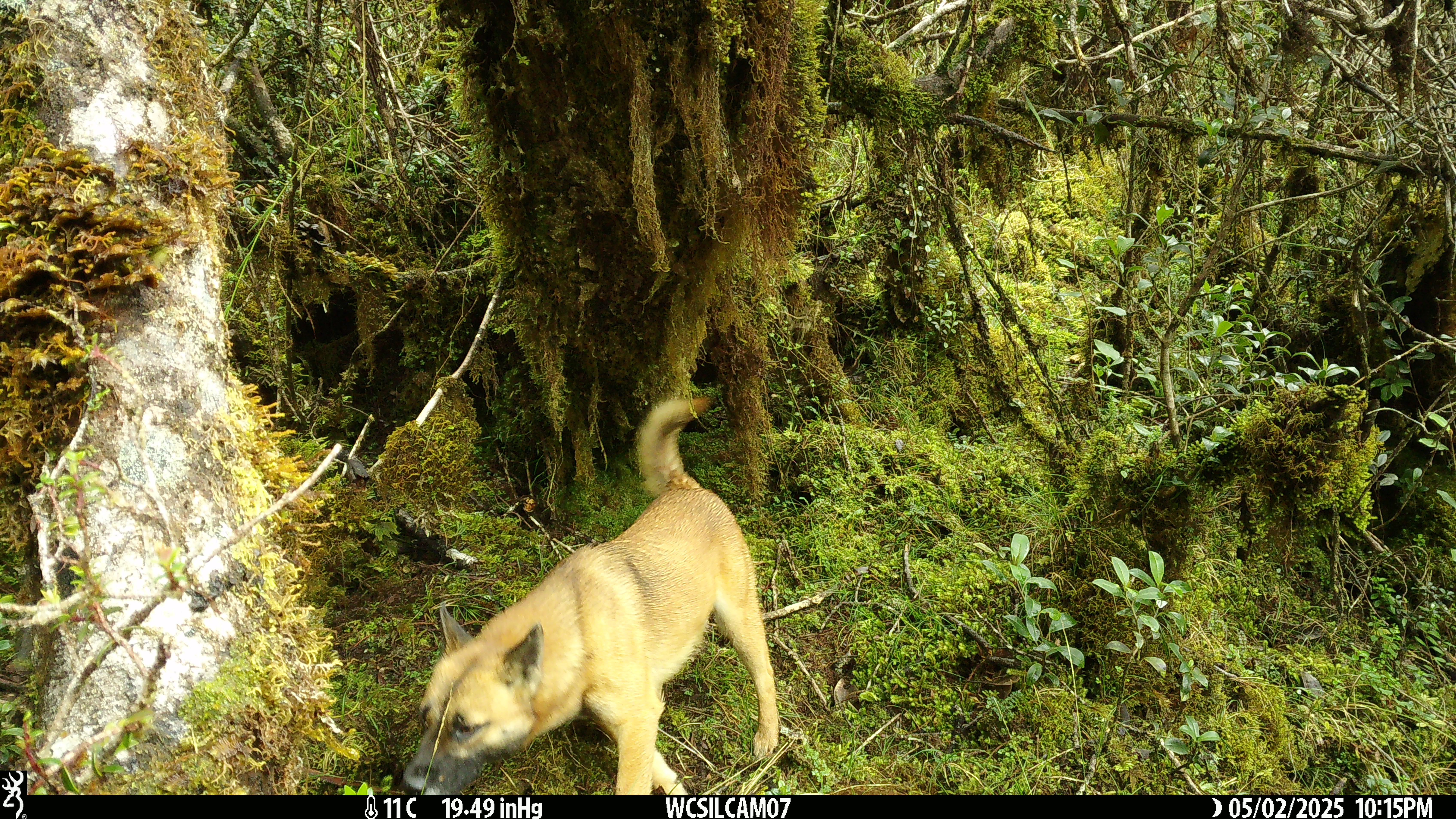
Pic 4 & 5 (left - right): A small dorcopsis captured at the Inaugl Natural Resource Management Inc. Conservation Area (KGWan) & a wild dog captured at the Kuglkane Biodiversity Nature Conservation Area (Kuglkane).
In September, more than 100 residents, including clan chiefs, community leaders, women, youth, and children, gathered at Riverside Guesthouse in Gembogl to learn about the findings from the monitoring activities. The event provided an opportunity to share results directly with landowners and community members, helping to strengthen awareness of the biodiversity found within their forests.
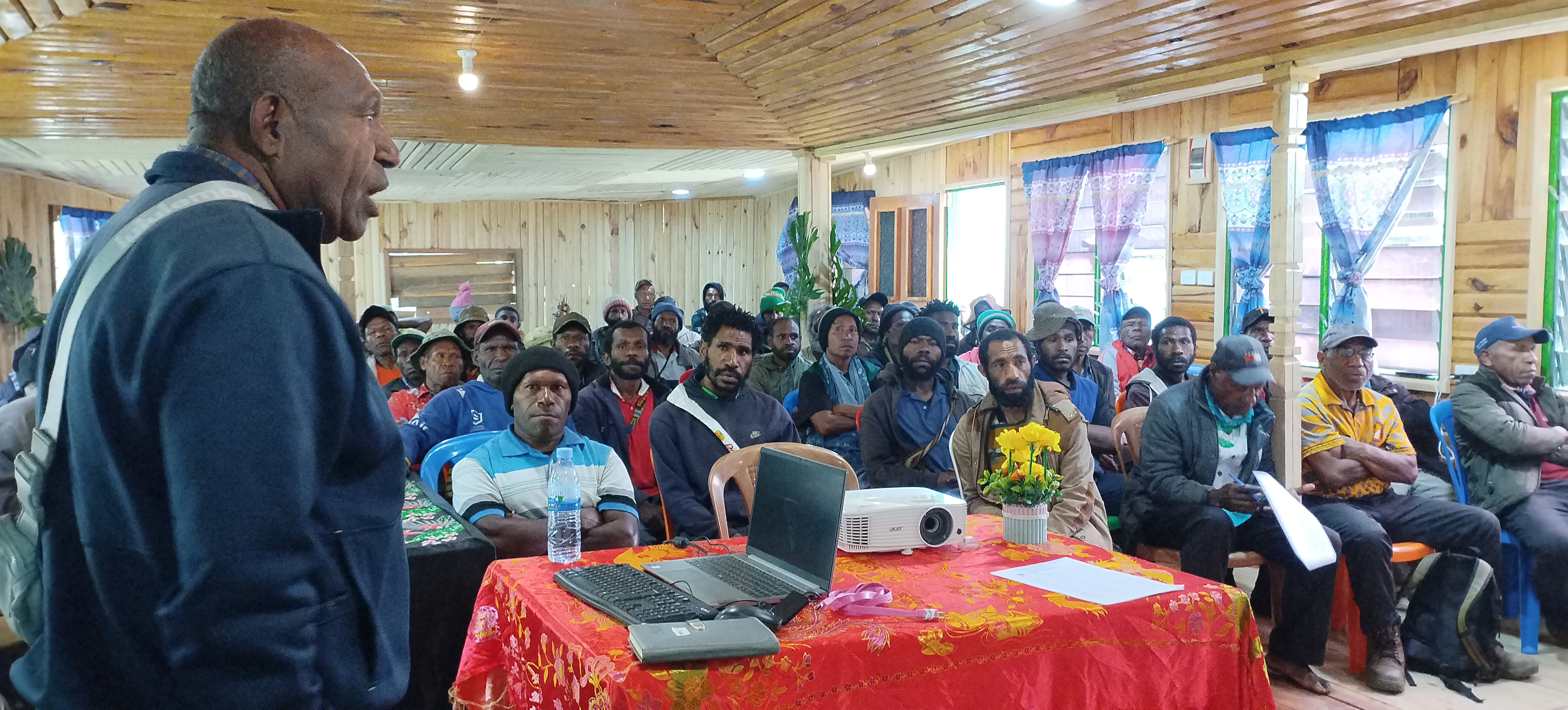
Pic 6: Director of the Mt Wilhelm Biodiversity and Nature Conservation Area (Kakagl) , Clement Baundo addressing the Mt Wilhelm community during the presentation of the camera trap results.
Community leaders welcomed the opportunity to view and discuss information gathered from their customary lands.
"Seeing the information and images collected from our forests helps our communities better understand the wildlife we have and why it is important to protect it for future generations," local conservation leaders from Mt Wilhelm Biodiversity & Nature Conservation, Inaugl Natural Resource Management Inc., and Kuglkane Biodiversity & Nature Conservation noted during the discussions.
The camera traps recorded a range of wildlife, including the Endangered Goodfellow's tree kangaroo, the Near Threatened New Guinea quoll (a native carnivorous marsupial), the Near Threatened small dorcopsis (a forest wallaby), as well as dwarf cassowaries, black sicklebills, and other forest species. The diversity of animals observed highlights the ecological significance of the region and the importance of ongoing monitoring and conservation efforts.
Following the community presentation, WCS researchers met with the Simbu Provincial Government to share findings and discuss opportunities for conservation collaboration. Provincial representatives welcomed the initiative and encouraged continued engagement with communities and government partners to support evidence-based environmental management across the province.
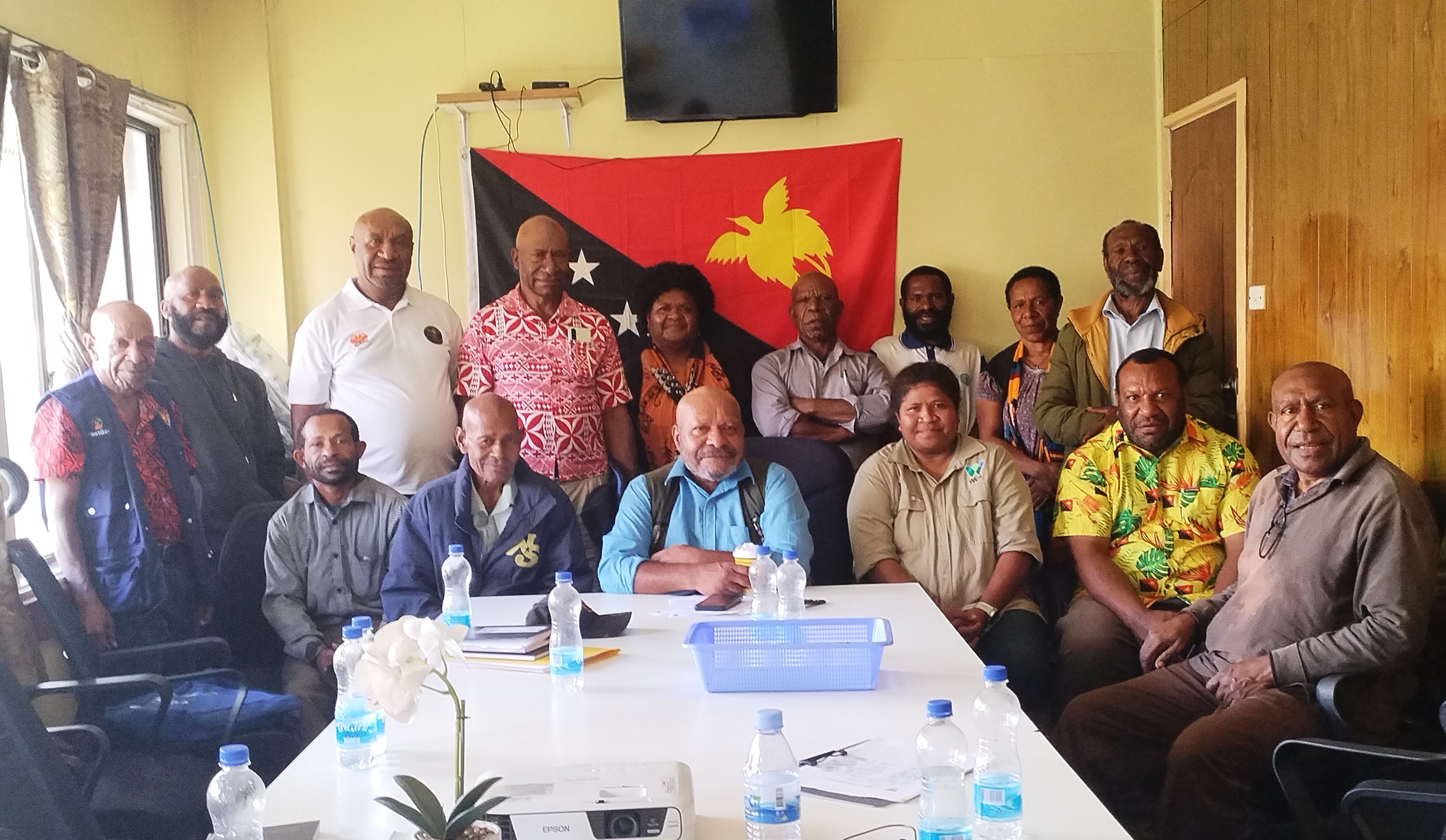
Pic 7: WCS PNG's Terrestrial team members, Peter Kaupa (standing third from the right-hand side) and Shienel Samuel (sitted in front third from the right-hand side) in a group photo with the Simbu Provincial Government representatives, stakeholders, and key WCS conservation CBO partners in Simbu after the presentation of the camera trap results.
Discussions also explored the various pressures facing wildlife populations and the importance of balancing conservation objectives with cultural traditions and local livelihoods. Participants highlighted the value of working together to ensure that wildlife resources are managed sustainably, allowing customary practices, food security, and biodiversity conservation to coexist for future generations.
By bringing together local knowledge, community stewardship, scientific research, and government engagement, the initiative is helping to build a stronger foundation for long-term conservation in Simbu Province.
WCS PNG extends its sincere appreciation to its partner community-based organisations: Inaugl Natural Resource Management Inc., Mt Wilhelm Biodiversity & Nature Conservation, Kuglkane Biodiversity & Nature Conservation, and the Gembogl community assistants for their dedication and commitment throughout the project activity.
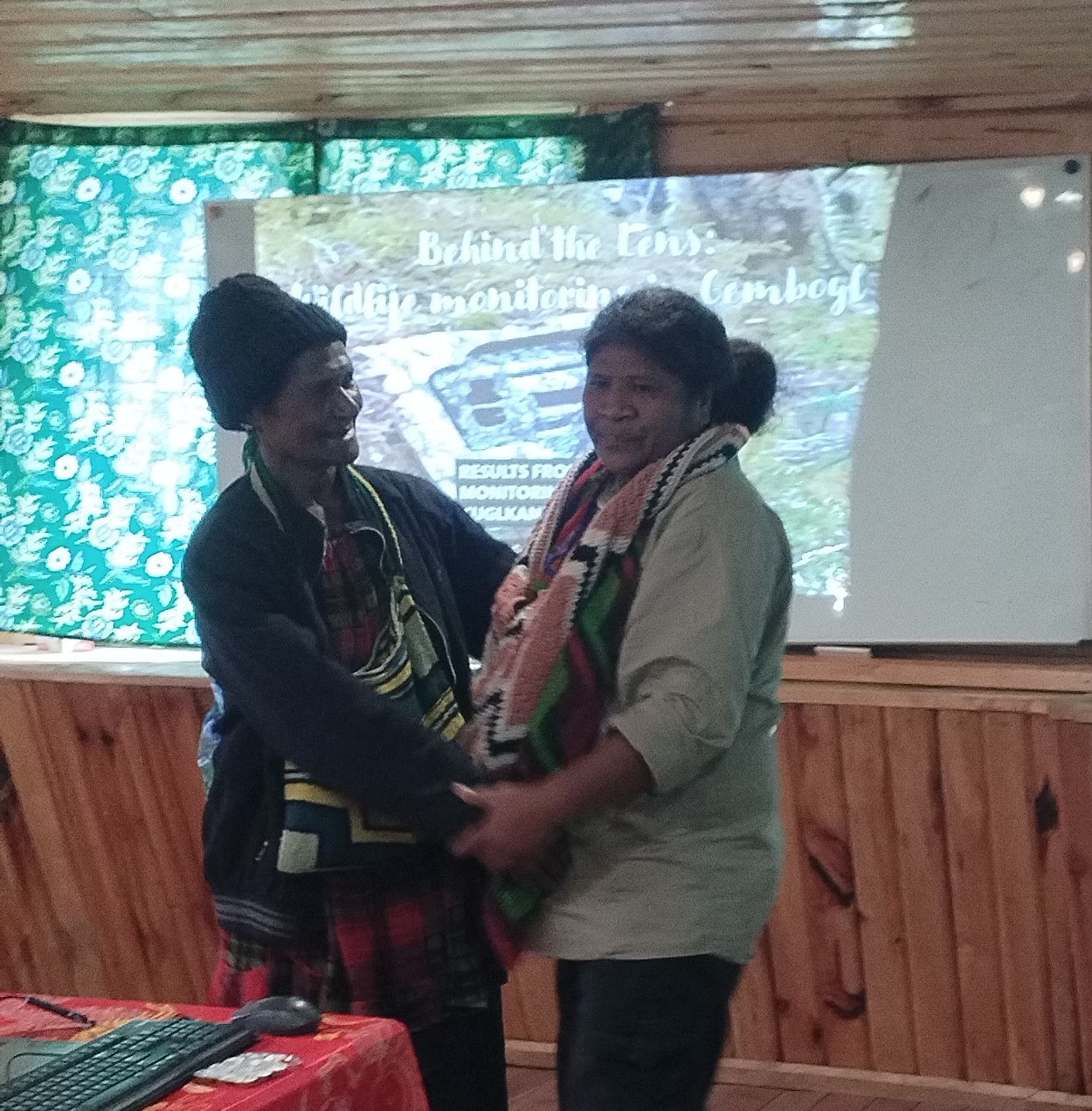
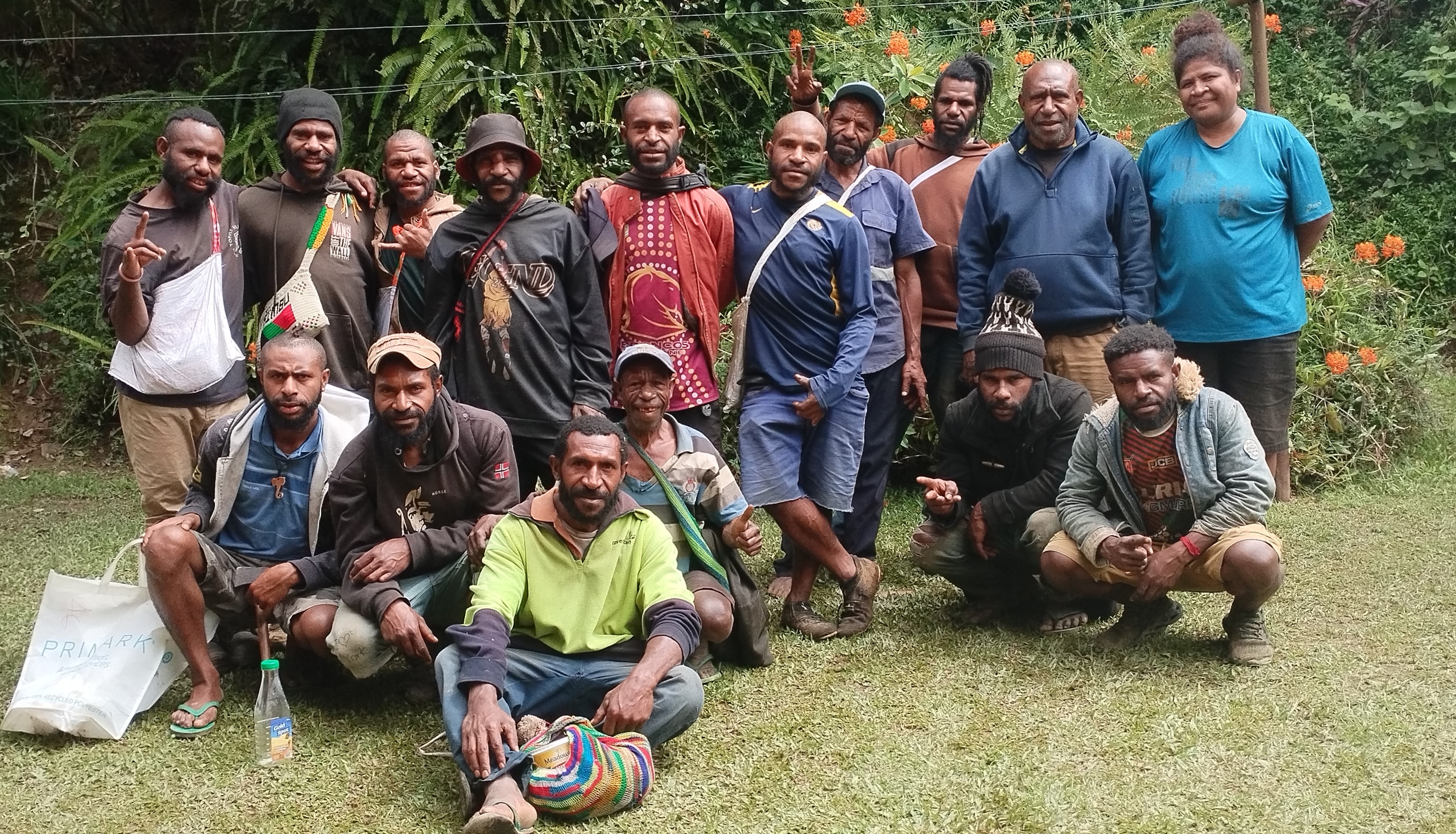
Pic 8 & 9: Jenny Steven (left), a woman leader from the Inaugl Natural Resource Management Inc. Conservation Area (KGWan) presenting a bilum to WCS PNG's Terrestrial Conservation officer, Shienel Samuel who is leading the camera trapping activity up in the Highlands of PNG as a sign of appreciation & Shienel posing with the Community assistants of Mt Wilhelm whose efforts are greatly appreciated for their assistance throughout the camera trap excercise on the ground.
WCS PNG also gratefully acknowledges the support of the Sustainable Wildlife Management (SWM) Programme and the Agenc Française de Développement's Solwara na Graun bilong Pipol (SoNG) Project, whose contributions made this work possible.