For generations, the forests and land of Eastern Highlands Province have sustained the livelihoods, culture, and identity of local communities. Now, three communities are taking deliberate steps to ensure that these landscapes remain protected for the future—by first understanding the law.
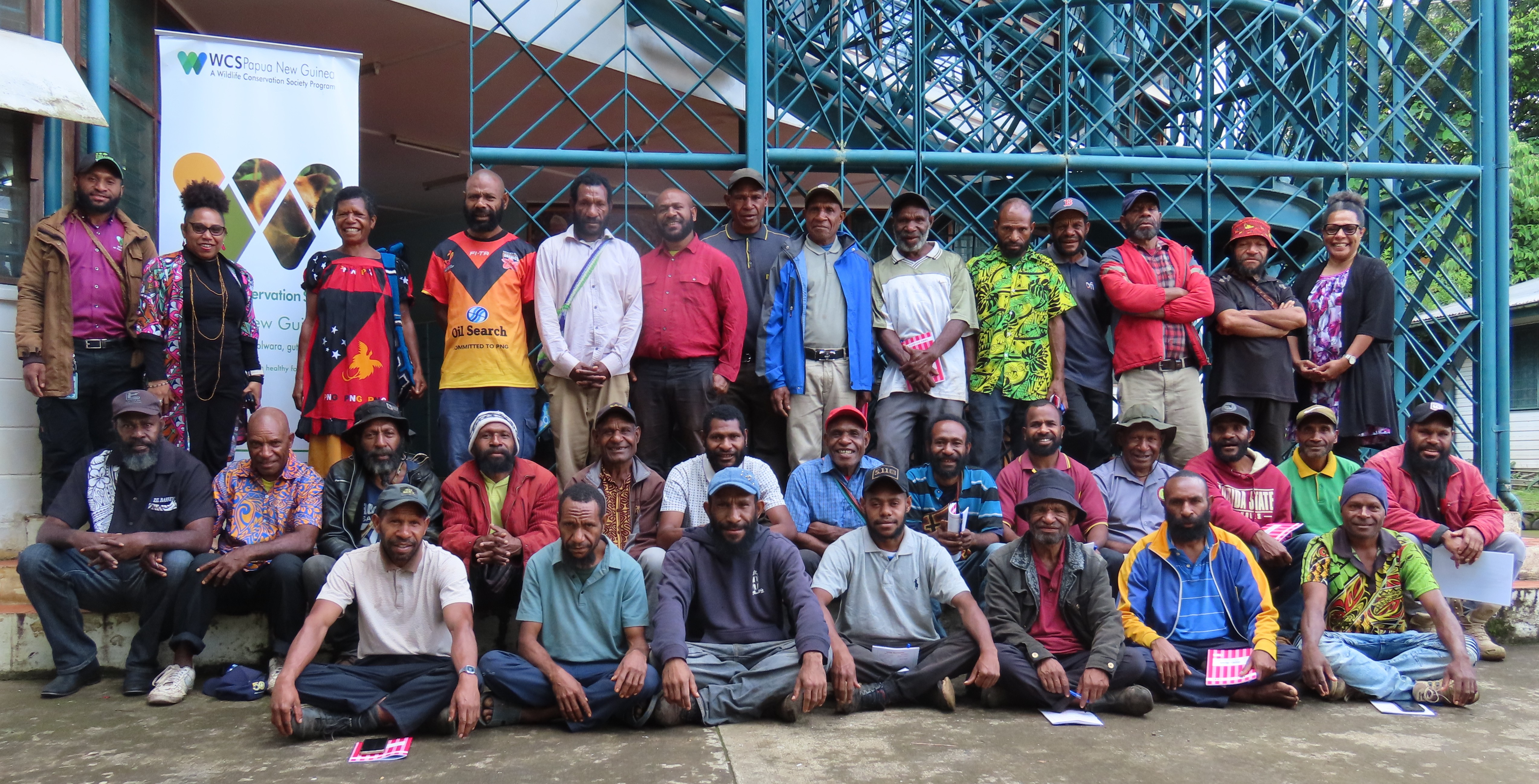
Participants of the training and WCS PNG staff.
Communities from Keremu in Daulo District, Lihona in Henganofi District, and Samiri in Goroka District have recently signalled their desire to conserve their forests and customary land. Their interest has sparked ongoing discussions with Wildlife Conservation Society (WCS) Papua New Guinea’s (PNG’s) Goroka office, seeking technical support to guide community‑led conservation efforts.
That journey took a significant step forward in April, when 30 community representatives gathered in Goroka for a week‑long basic legal awareness training from 13 to 17 April. Ten participants from each community—youths, elders, and local leaders—came together to learn how Papua New Guinea’s legal system can support their aspirations to protect their land.
For many, it was their first formal introduction to how the law works.
Participants were guided through foundational topics such as what the law is and what it does, the structure of government and courts, and the role of the village court system in resolving disputes. The training also explored Community‑Based Organisations (CBOs), the principle of Free, Prior and Informed Consent (FPIC), and key conservation tools available under PNG law, including Conservation Deeds and the Protected Areas Act.
 \
\
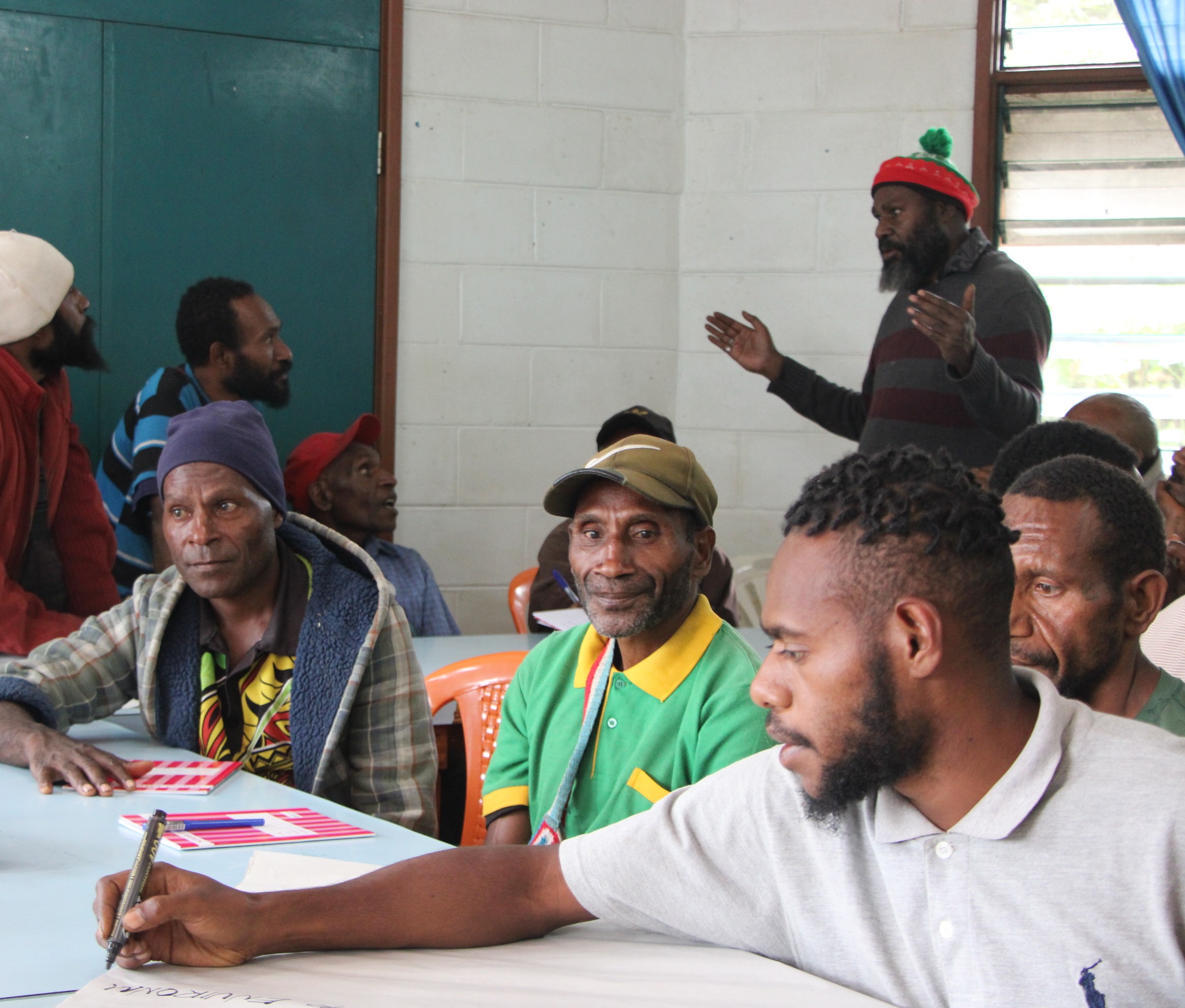
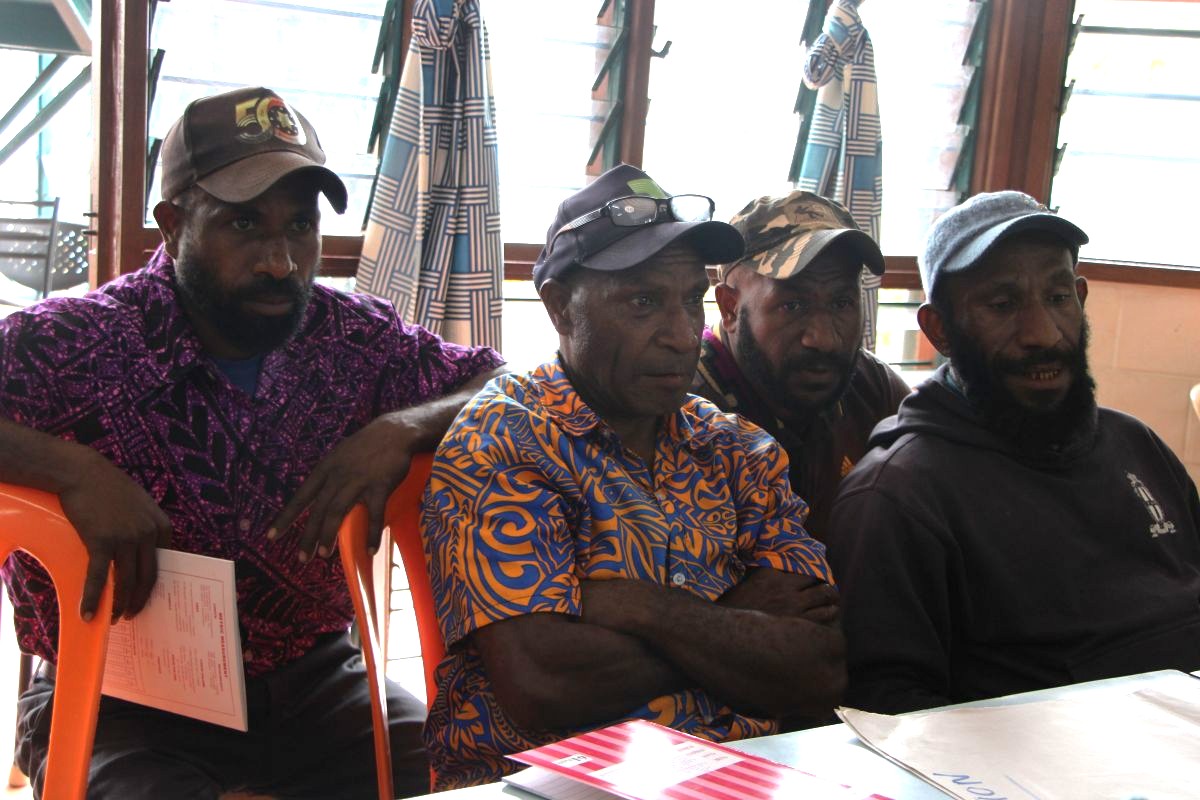
From left - right: Participants from Samiri and Daulo involved in group discussions to present.
Leading the training was Grace Dom, WCS PNG’s Legal and Policy Advisor, whose expertise in environmental and human rights law helped translate complex legal concepts into practical, community-level understanding.
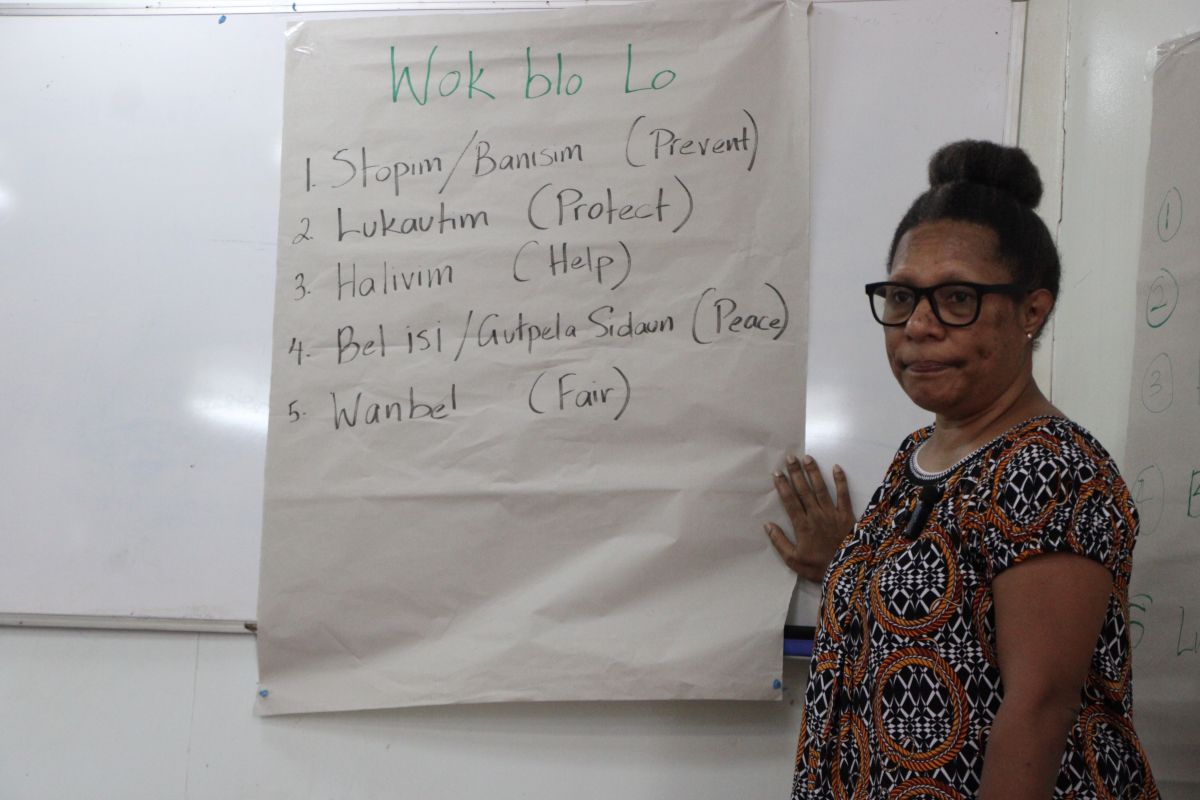
Grace explaining what the law does in simple and brief terms in Tok Pisin.
"Since most land in PNG is held under customary ownership, understanding the law is essential for communities to confidently protect their land and make informed decisions about its future,” said Grace. “This training was designed to build practical legal awareness so community members can engage on equal footing in conservation and development processes and avoid being disadvantaged.”
By the end of the week, the impact was clear. Participants described a renewed confidence in understanding the law, particularly at the village level, and a stronger grasp of their rights and responsibilities as citizens of Papua New Guinea. Many believe the knowledge gained will help strengthen leadership, improve transparency, and support better decision‑making within their communities.
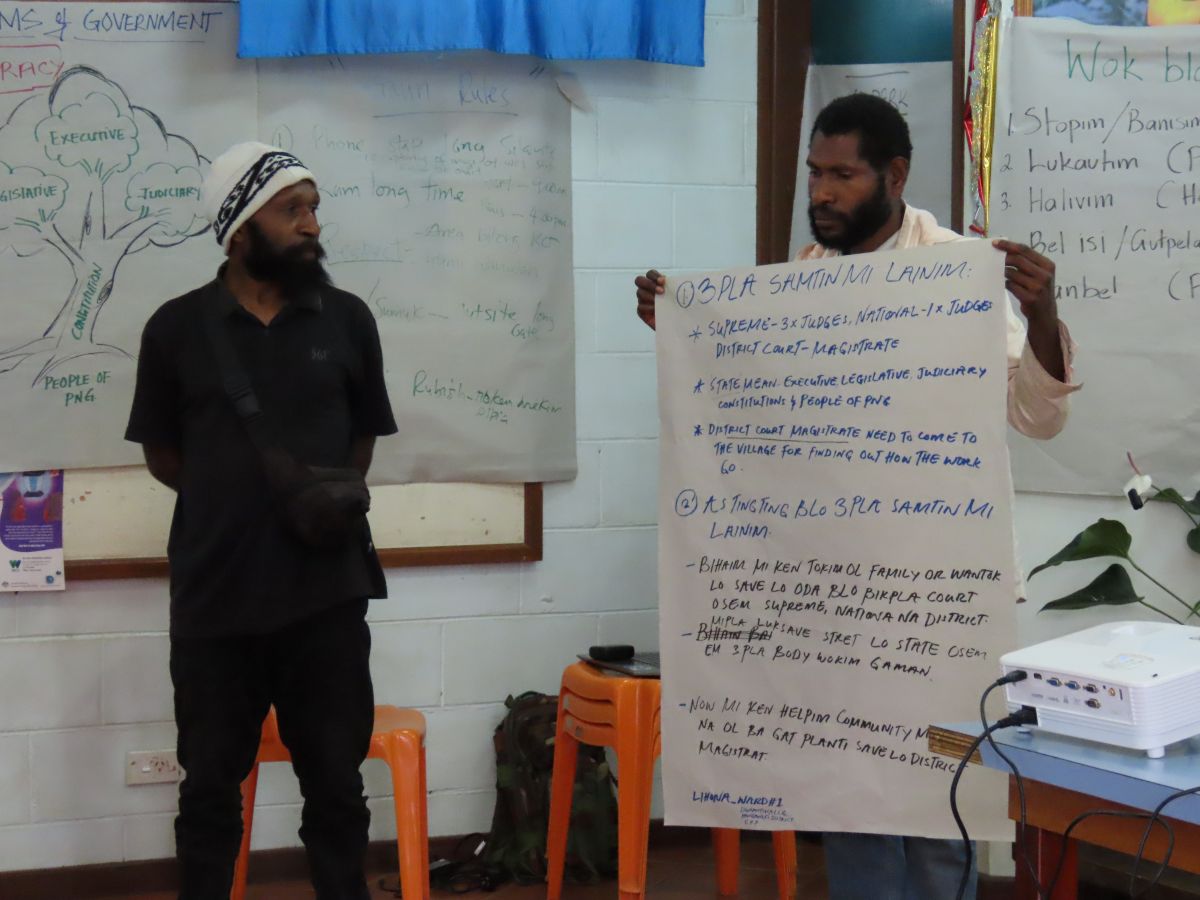
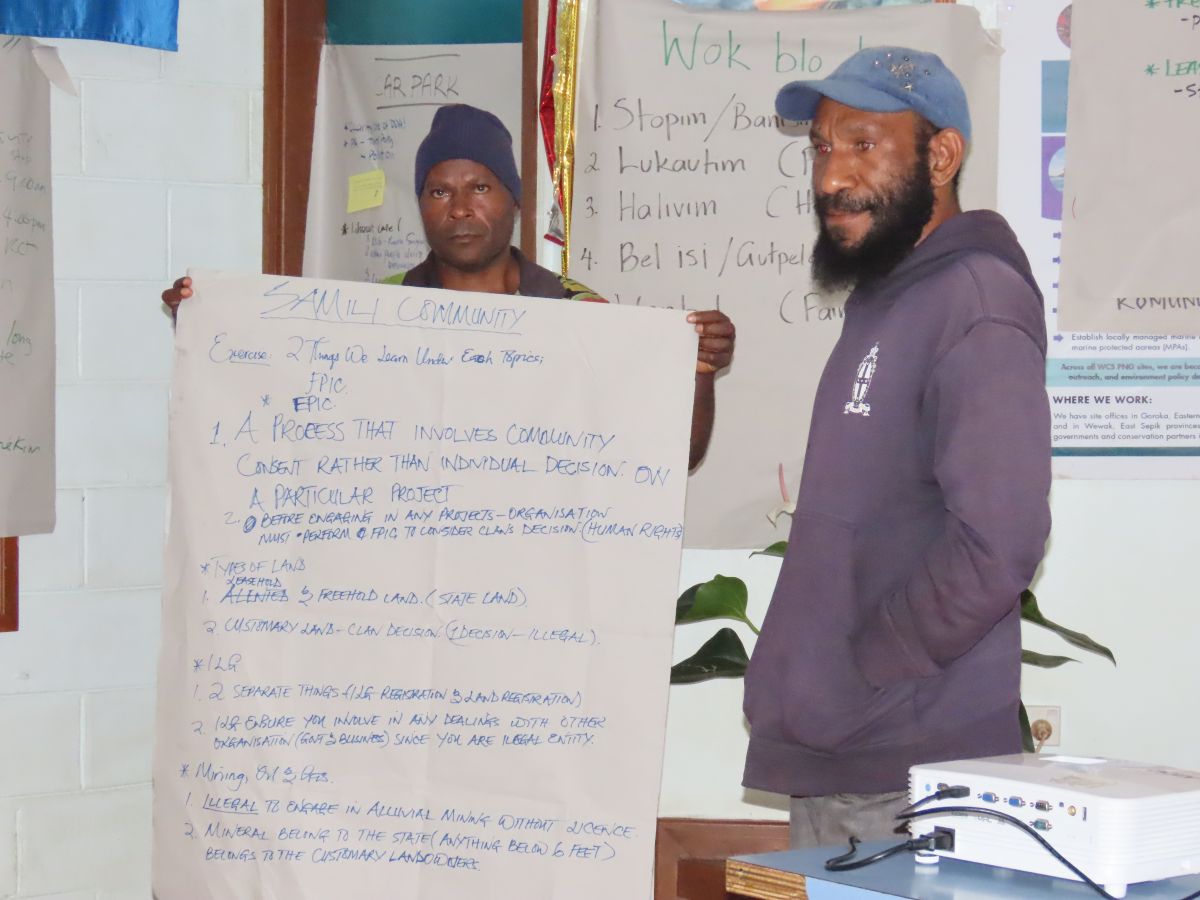
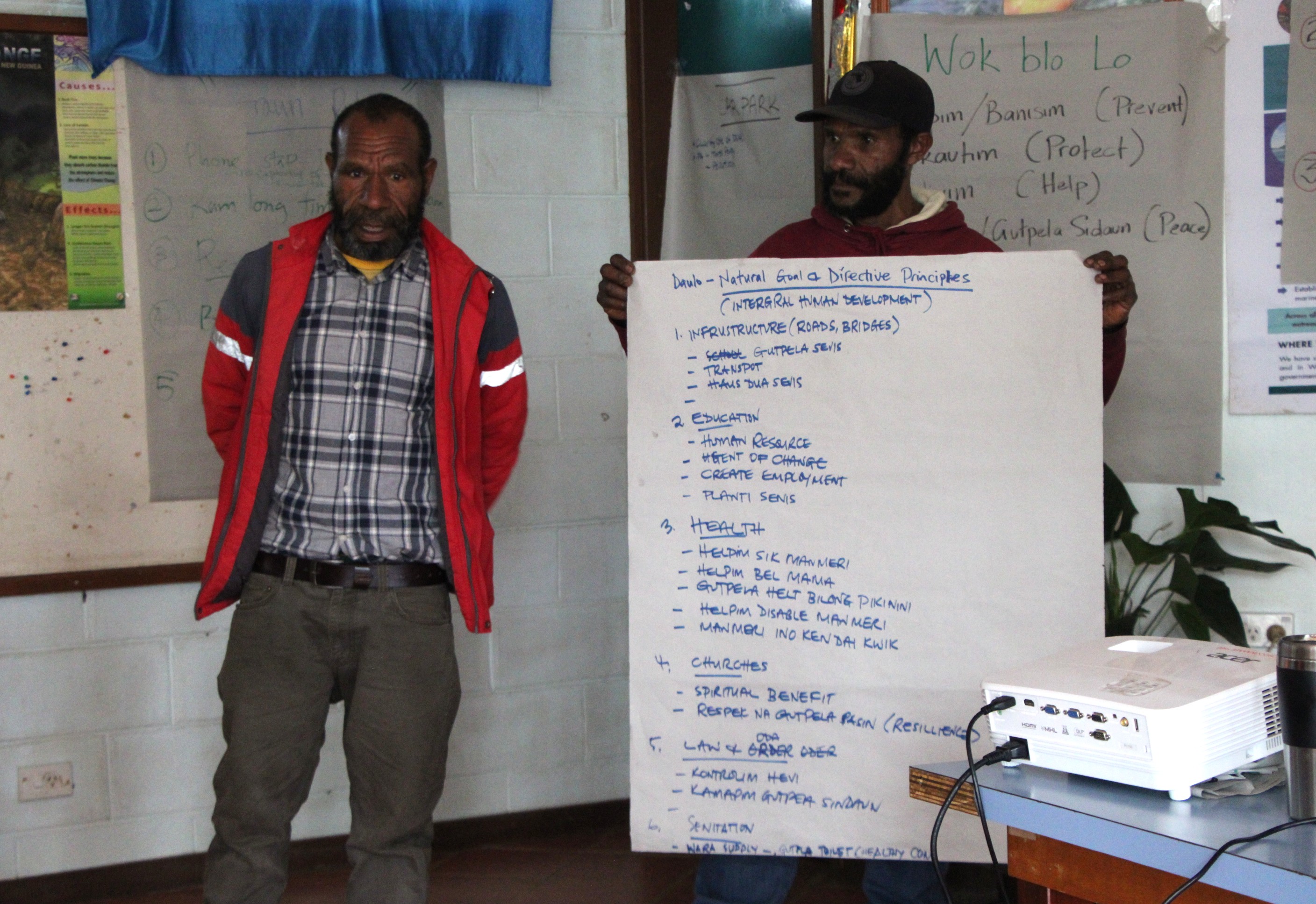
From left - right: Participants from Lihona, Simiri and Daulo presenting their group discussions on what they've learned.
Grace said that she was encouraged by the strong level of participation and thoughtful discussions throughout the week, which showed how keen participants were to apply legal knowledge to their own priorities.
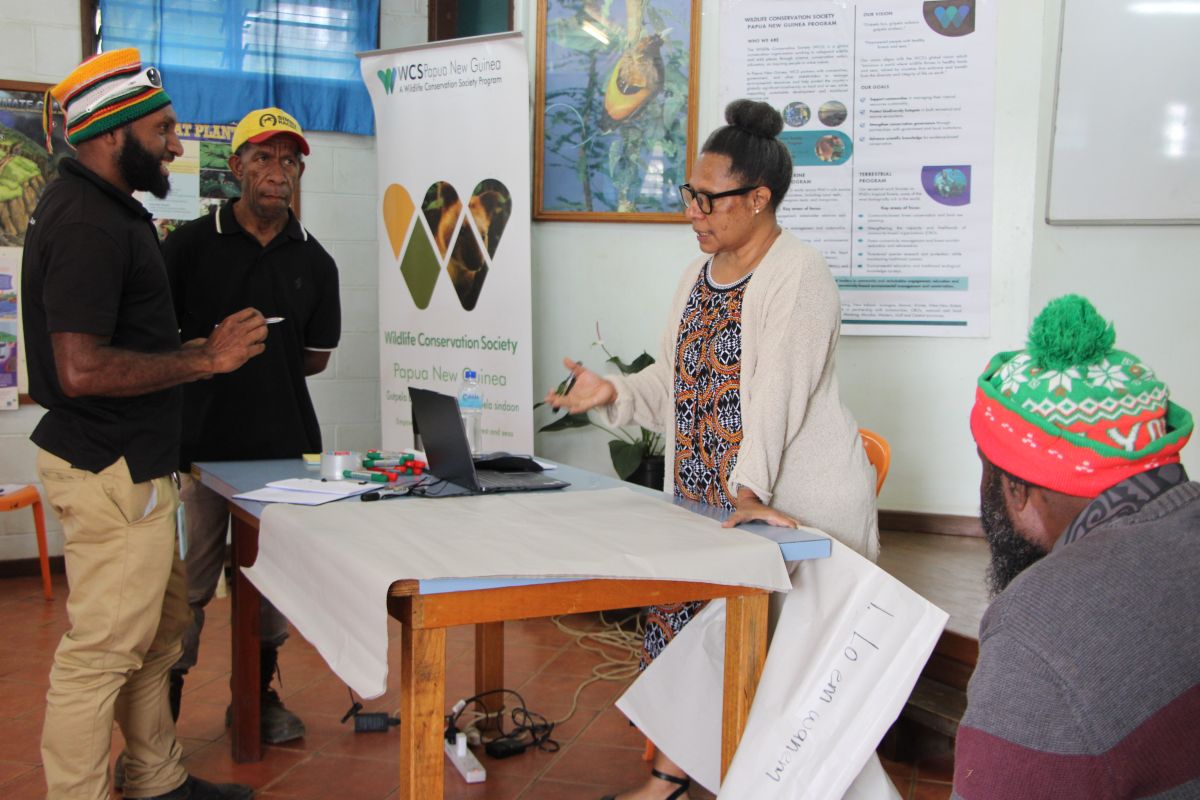
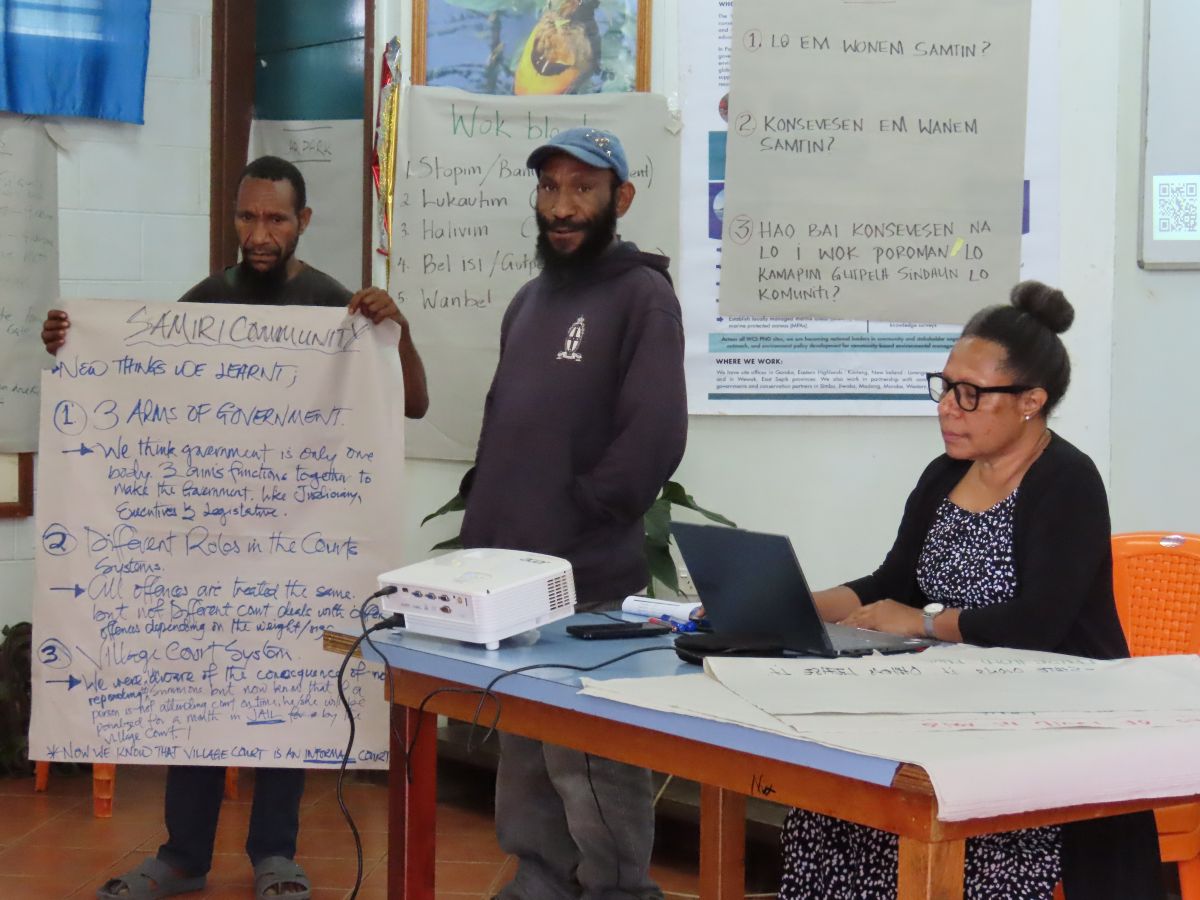
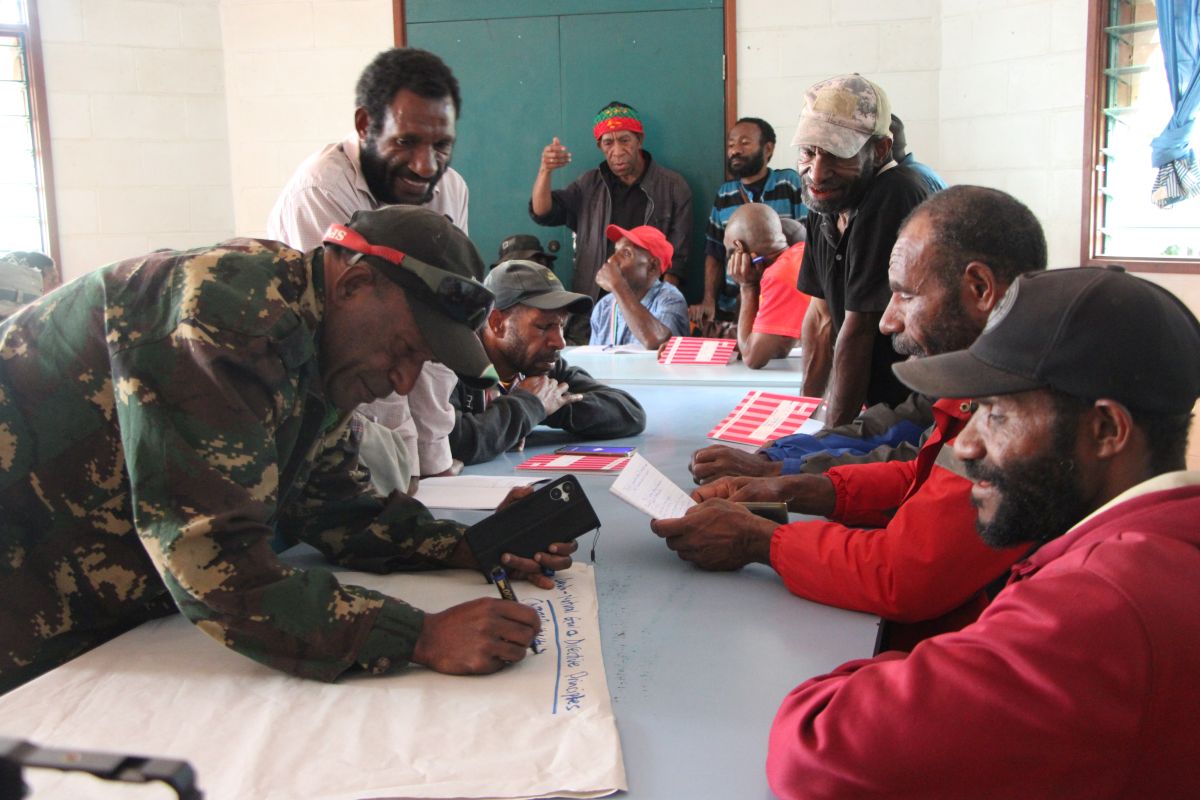
From left - right: WCS staff assisting Grace to draw simple graphs to explain the different arms of government and Samiri group presenting their group discussions of the training as Grace listens on.
Among the group was a local village pastor from Lihona, Kevi Willy the only woman participant in the training. Sitting alongside youths and male community leaders, she said her presence was intentional. “As a woman pastor, I feel it is important that everyone—women, youths, and children—understands the laws that protect our people, land and environment,” she said. “The land and forests are the resources that sustain our communities, our faith, and our future.”
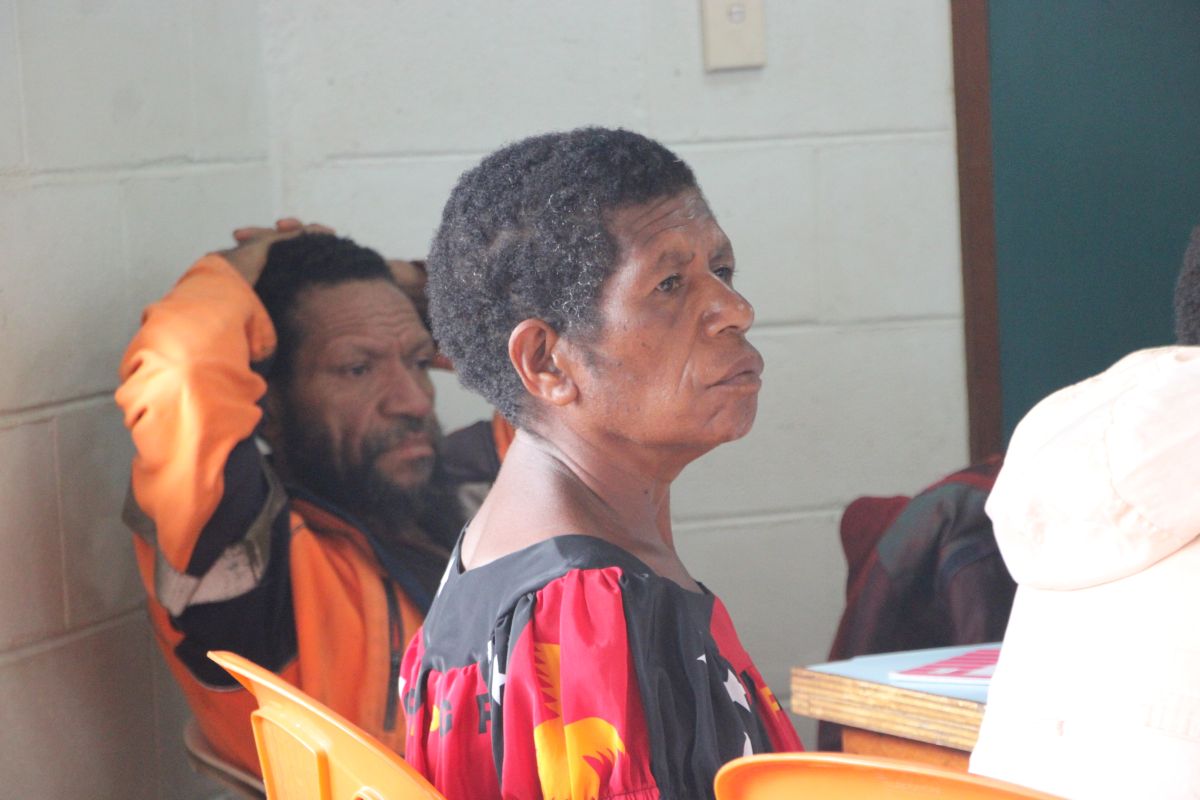
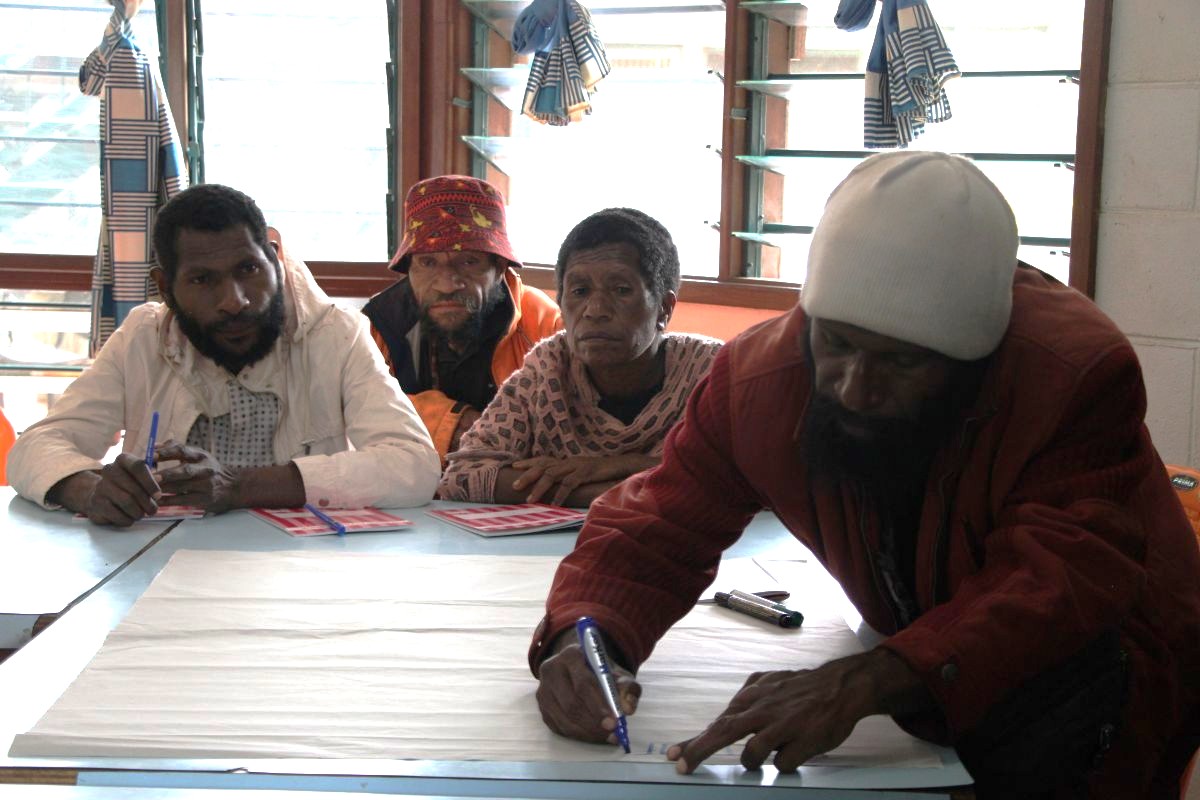
Kevi Willy grasping every detail as she sits through the training.
For these three Eastern Highlands communities, the training was more than a workshop—it was a starting point. With a clearer understanding of the law and growing confidence in their collective voice, they are now better equipped to consider formal conservation pathways that protect their forests while honoring customary land ownership.
Through the support of the Agence Française de Développement (AFD) funded SoNG project, this training was a success and WCS PNG will continue to engage with the communities as they explore next steps, supporting locally driven conservation efforts grounded in local knowledge, consent, and long‑term stewardship.