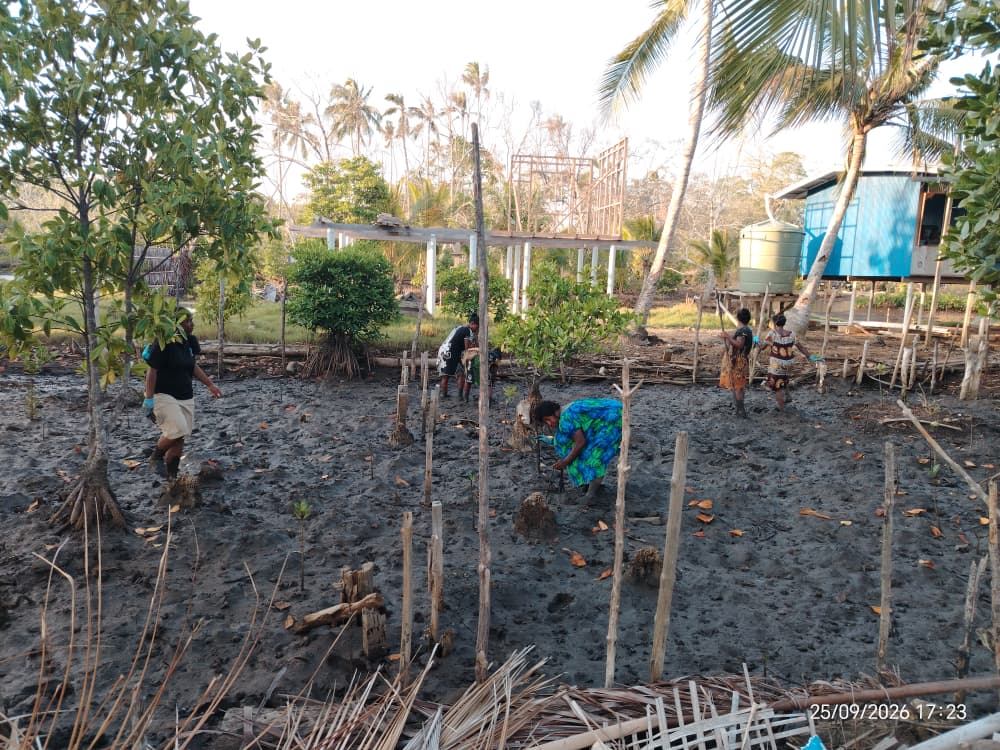
PC 1: Direct planting of mangrove seedlings by women at Lohi village.
From watershed protection to mangrove restoration, South Coast communities in Manus province are turning local action into lasting impact together with the support of the Kiwa WISH+ project.
Communities across Pao, Londru, Lohi, and Locha came together in September to strengthen their efforts in watershed restoration, mangrove rehabilitation, and water resource management.
With support from the Manus Provincial Forestry Office and WCS Manus, community members participated in hands-on training led by Benard Tewi, Manus Provincial Forestry Officer, to build temporary tree nurseries, prepare seedlings, and strengthen local knowledge on nursery management.
Pao Village expanded its existing nursery, while Londru and Lohi communities began preparations for their own restoration initiatives.
A highlight of the gathering from the 16-25 September was a mangrove restoration awareness session led by the Ireh Mangrove Women's Group from Lopohan Island.
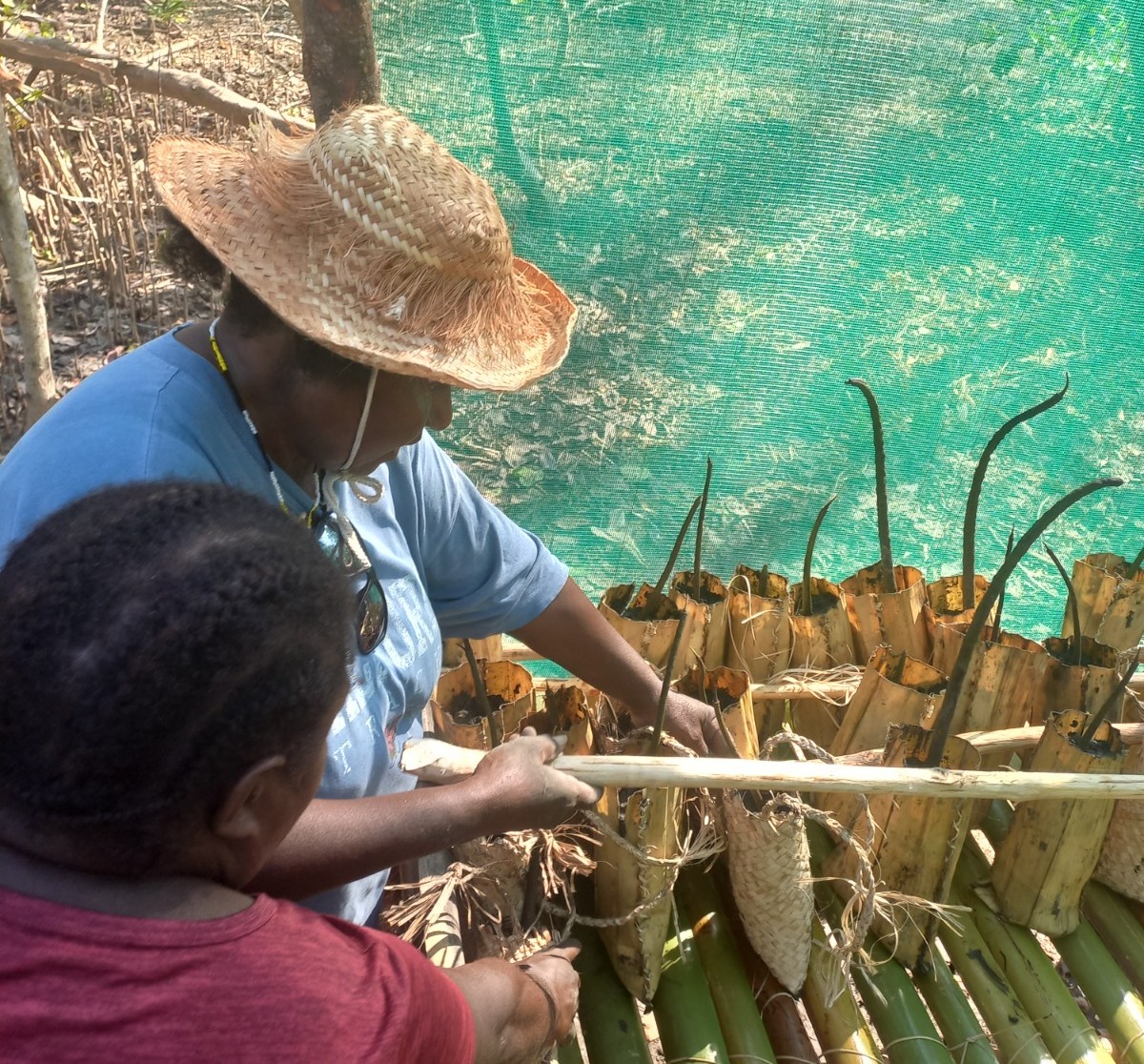
PC 2: The women using pandanus bags as substitute of polybags to plant mangrove seedlings.
Participants learned practical techniques for establishing mangrove nurseries and explored innovative biodegradable planting bags woven from pandanus leaves and bark. This session highlighted the importance of local leadership, women's participation, and traditional knowledge in developing sustainable, community-driven solutions to climate and environmental challenges
Despite challenging conditions caused by prolonged dry weather, community members planted 130 mangrove seedlings along the Lohi River and established new nurseries in Lohi and Locha to support future restoration activities.
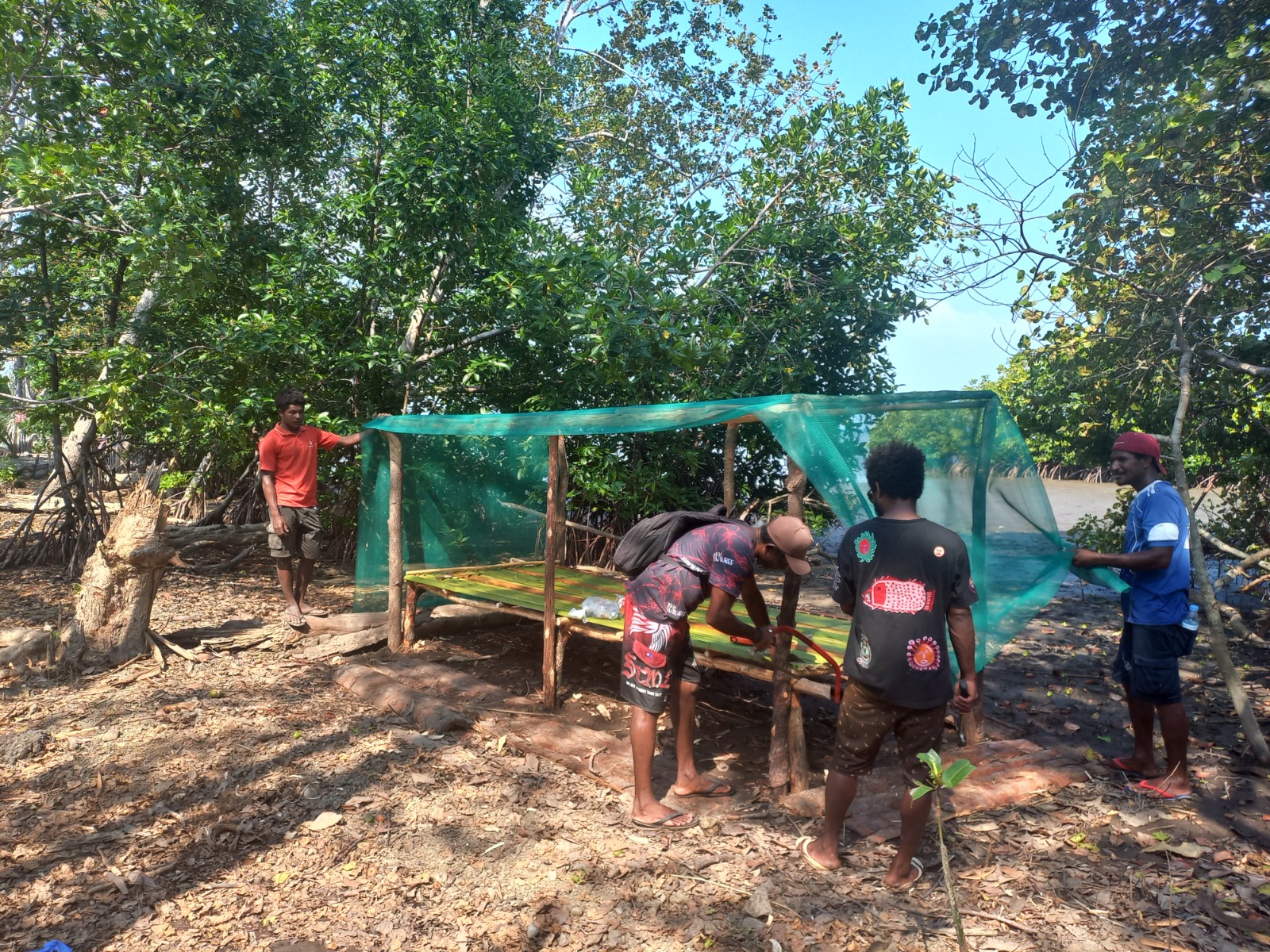
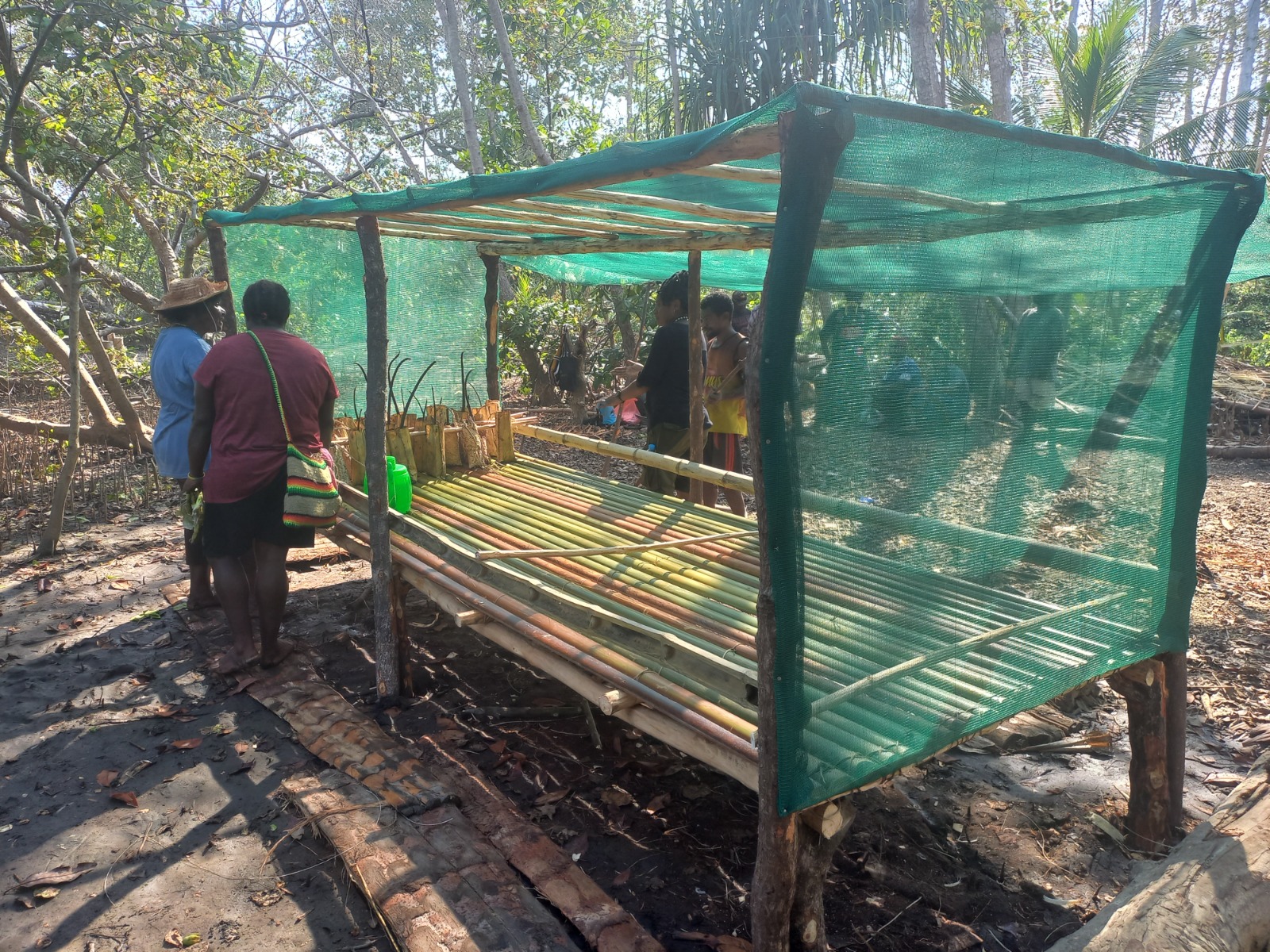
PC 3 & 4: Londru 2 and Locha mangrove nursery set up.
The team also distributed the final versions of the Water and Sanitation Safety Plans (WSSPs) developed with community water committees, helping communities identify and address water and sanitation risks while strengthening long-term water security.
Together, these communities are investing in healthier ecosystems, stronger watersheds, and more resilient livelihoods for future generations.